
Flanges
– Industrial Pipe Flanges for Global Piping Systems
Wellgrow Industries Corp. manufactures and supplies industrial pipe flanges for bolted connections between pipes, valves, pumps, and other piping equipment. The product range includes stainless steel and carbon steel flanges in sizes from 1/2 to 48 in. (DN 15 to DN 1200), subject to flange type, dimensional standard, pressure rating, material grade, and order requirements.
Flanged joints allow piping components to be assembled, dismantled, inspected, and maintained without cutting the line. Joint integrity depends on the complete assembly—not the flange alone. The flange standard and facing, gasket, bolting, alignment, service conditions, and assembly procedure must form a compatible system.
Wellgrow supplies ASME/ANSI, JIS, DIN, EN, and BS flange families. Because available sizes and ratings differ by standard and flange type, each requested combination is reviewed during quotation.
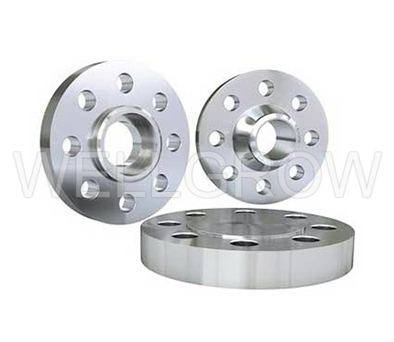
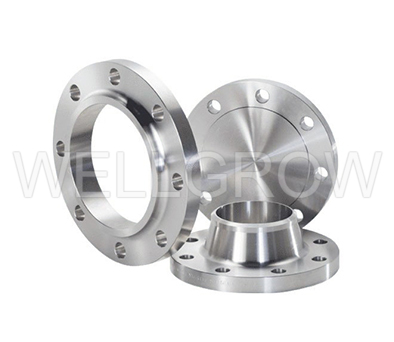
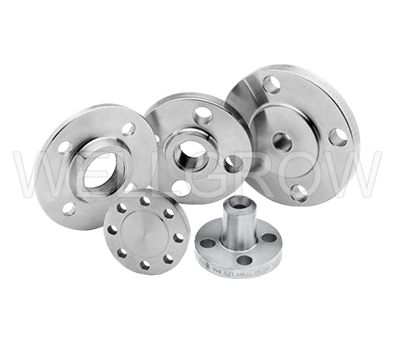
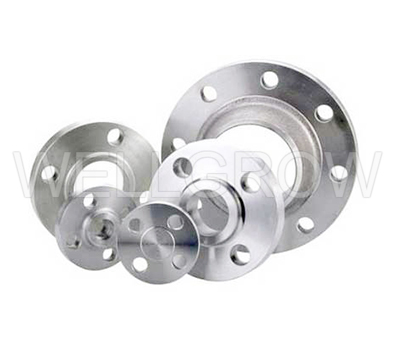
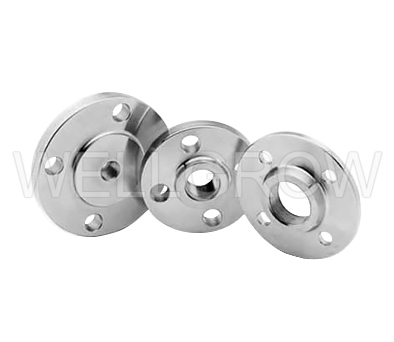
Pipe Flange Types
Weld Neck Flanges
Weld neck flanges connect to the pipe with a butt weld through a tapered hub. Specify the pipe outside diameter, wall thickness or schedule, flange bore, material, welding requirements, and applicable inspection. They are selected when the project design and fabrication requirements call for this joint configuration.
Slip-On Flanges
Slip-on flanges fit over the pipe and are welded in the installed position. Confirm the required weld details, pipe size and wall thickness, facing, and rating.
Blind Flanges
Blind flanges close the end of a piping system, valve, nozzle, or equipment opening. The flange rating, material, facing, gasket, and bolting must be compatible with the mating connection and required isolation arrangement.
Socket-Weld Flanges
Socket-weld flanges receive the pipe in a socket and use a fillet-welded joint. They are commonly considered for compact small-bore piping where this connection is permitted by the applicable project requirements. State the pipe size, wall thickness, material, Class, and weld requirements.
Lap-Joint Flanges
Lap-joint flanges are used with a compatible stub end or lapped end. The backing flange can rotate for bolt-hole alignment and can support systems that require dismantling. Specify the backing flange and stub end as separate but compatible items, including their materials, standards, dimensions, facing details, and quantities.
Threaded Flanges
Threaded flanges connect to threaded pipe without welding at the flange-to-pipe joint. Specify the thread standard and designation, male or female configuration, material, rating, and service. Use in hazardous locations or with particular fluids is not automatic and must comply with applicable project and site safety requirements.
Flange Specifications
The following table summarizes the stated product range. Availability varies by standard, flange type, size, rating, material grade, facing, and manufacturing route. Confirm each requested combination during quotation.
| Specification | Stated range |
| Size | 1/2 to 48 in. (DN 15 to DN 1200) |
| Dimensional standard families | ASME/ANSI, JIS, DIN, EN, and BS |
| ASME Class ratings | Class 150, 300, 600, 900, 1500, and 2500 |
| JIS pressure classes | 2K, 5K, 10K, 16K, 20K, 30K, 40K, and 63K |
| DIN ratings | PN 2.5, 6, 10, 16, 25, 40, 64, 100, 160, 250, 320, and 400 |
| EN 1092-1 ratings | PN 6, 10, 16, 25, 40, 63, 100, 160, 250, 320, and 400 |
| BS 4504 ratings | PN 2.5, 6, 10, 16, 25, and 40 |
| Flange types | Weld neck, slip-on, blind, socket-weld, lap-joint, and threaded |
| Facings | Flat face (FF), raised face (RF), ring-type joint (RTJ), and tongue-and-groove (T&G) configurations |
| Stainless steel | ASTM A182 F304, F304L, F316, and F316L |
| Carbon steel | ASTM A105 and ASTM A350 LF2 |
Dimensional Standard Families
The exact product standard should be stated in the purchase order. When a project depends on a particular edition or legacy designation, include that information in the order documents. A standard family name alone may not fully define dimensions or interchangeability.
| Standard family | Selection note |
| ASME | Specify ASME B16.5 or the applicable large-diameter standard, together with size, Class, type, facing, bore, and material. |
| EN | Specify EN 1092-1, flange type number, DN, PN, facing designation, material, and supplementary requirements when applicable. |
| DIN | Identify whether the order uses DIN EN 1092-1 or a purchaser-specified legacy DIN drawing or designation. |
| JIS | Specify the JIS standard, nominal size, pressure class, type, facing, material, and mating requirements. |
| BS | Specify the applicable British Standard or purchaser-specified designation, facing, material, and other required order details. |
The range covered by an industry standard is not the same as Wellgrow's supply range. Requested combinations remain subject to quotation and technical review.
Material Specifications and Grades
- Stainless steel: ASTM A182 F304, F304L, F316, and F316L
- Carbon steel: ASTM A105 and ASTM A350 LF2
Select the material specification and grade according to pressure, temperature, process fluid, corrosion conditions, external environment, welding requirements, and applicable project specifications. A material family name such as “stainless steel” or “carbon steel” is not a complete specification.
ASTM A350 LF2 is available for specified low-temperature service requirements. State the required grade, class or heat-treatment condition, and inspection documents in the RFQ or purchase order.
Pressure Ratings and Flange Facings
Class, PN, and JIS pressure classes are standard-specific rating systems. They are not interchangeable and should not be treated as fixed working-pressure values. Allowable pressure depends on the applicable standard, material group, temperature, size, and flange type.
FF, RF, RTJ, and tongue-and-groove configurations require compatible mating components. For RTJ orders, identify the required groove and ring number when applicable. For tongue-and-groove orders, identify each mating half.
How to Select a Pipe Flange
Flange Type Comparison
| Selection point | Weld neck | Slip-on | Blind | Socket-weld | Lap-joint | Threaded |
| Main function | Butt-welded pipe connection | Flange fitted over and welded to pipe | Closure for a flanged opening | Socket and fillet-welded pipe connection | Rotating backing flange used with a stub or lapped end | Threaded pipe connection |
| Key companion data | Pipe OD, wall, bore, and weld end | Pipe OD, wall, and weld detail | Mating flange and facing | Pipe OD, wall, and socket detail | Stub end or lapped end | Thread standard and designation |
| Installation consideration | Welding, alignment, and weld inspection | Internal and external weld details as specified | Safe isolation and removal procedure | Socket gap and welding requirements | Two compatible components must be ordered | Project and service limitations for threads |
| Typical reason to consider | The project specifies a butt-welded hub connection | Fabrication needs suit the design | A line or equipment opening must be closed | A compact small-bore welded connection is permitted | Alignment or dismantling needs favor a backing flange | Welding at the joint is not permitted or desired and threads are allowed |
Final flange selection must comply with the applicable dimensional standard, project specification, service conditions, and installation requirements.
Seven Items to Confirm Before Ordering
- Product standard — State the applicable ASME, EN, DIN, JIS, or BS standard. Include the edition when required by the project or purchase order.
- Flange type and size — Identify the flange type, nominal size, and any special geometry shown on the drawing.
- Rating — State the design pressure and required Class, PN, or JIS pressure class.
- Material — Include the material specification, grade, class or heat-treatment condition, and supplementary requirements when applicable.
- Pipe and bore data — For welded and threaded flanges, provide the relevant pipe OD, wall thickness or schedule, bore, and end details.
- Facing — Specify FF, RF, RTJ, tongue, groove, or another required facing designation and finish.
- Inspection and documents — Identify additional dimensional reports, NDE, third-party inspection, marking, and packing requirements in the RFQ or purchase order.
Quality, Inspection, and Documentation
Every flange undergoes visual inspection and key dimensional checks.
An EN 10204 3.1 inspection certificate is provided with every shipment. The certificate identifies the flange type, facing, material specification, grade, size, visual and dimensional inspection, chemical composition, mechanical properties, hardness, heat number, and heat-treatment condition.
A certificate of conformity and dimensional report can be supplied at no additional charge when requested at the RFQ stage.
Nondestructive examination is an additional requirement and must be specified during quotation. Additional testing charges apply according to the requested method, extent, acceptance criteria, and report requirements.
Customer-appointed third-party inspection can be arranged before shipment when stated in the RFQ or purchase order. Third-party inspection fees are borne by the purchaser; Wellgrow does not charge a separate coordination fee.
Industrial Applications
Industrial pipe flanges are used in bolted piping and equipment connections for sectors such as:
- Oil and gas, refining, and petrochemical systems
- Power-generation and utility piping
- Water-treatment and general industrial piping
- Chemical-processing systems
Suitability is determined by the actual service, applicable standard, project specification, material, pressure-temperature rating, joint design, and required approvals. An industry name alone does not qualify a flange for every service within that industry.
RFQ Checklist for Pipe Flanges
For an accurate quotation, include:
- Flange type and line-item description
- Applicable dimensional standard
- Nominal size and quantity
- Class, PN, JIS pressure class, or other rating designation
- Material specification, grade, class or heat-treatment condition, and supplementary requirements
- Pipe OD, schedule or wall thickness, and required bore where applicable
- Facing designation and surface-finish requirement
- Bolting specification and quantity when bolting is included in the supply scope
- Thread standard and designation for threaded flanges
- Stub-end or lapped-end standard, material, dimensions, and quantity for lap-joint flanges
- Additional dimensional reports, NDE, third-party inspection, or other document requirements
- Marking, customer part number, private-label, packaging, preservation, and shipping-mark requirements
- Drawing or datasheet for non-standard, legacy-standard, or custom items
- Required delivery date and destination
Pipe Flange FAQ
Is a flange Class or PN rating the same as working pressure?
No. Class, PN, and JIS pressure classes are rating designations defined by their respective standards. Allowable pressure changes with the material, temperature, size, and flange type. Check the applicable pressure-temperature tables instead of converting a rating designation into one fixed working pressure.
What is the difference between weld neck and slip-on flanges?
A weld neck flange is butt-welded to the pipe through its hub and requires the correct pipe wall, bore, and weld preparation. A slip-on flange fits over the pipe and is welded in position. Selection depends on the piping design, service conditions, fabrication method, inspection requirements, and project specification—not on pressure alone.
How do I choose between carbon steel and stainless steel flanges?
Choose the material specification and grade according to pressure, temperature, process fluid, corrosion conditions, external environment, welding requirements, and low-temperature service requirements. ASTM A105 carbon steel, ASTM A350 LF2, and ASTM A182 stainless grades serve different material requirements. A grade name alone does not confirm suitability for the complete service.
Are threaded flanges automatically suitable for hazardous areas?
No. A threaded flange avoids welding at the flange-to-pipe joint, but that does not automatically qualify it for explosive or hazardous service. The fluid, pressure-temperature conditions, thread standard, site classification, and project safety rules must permit the connection.
Do Wellgrow flanges come with EN 10204 3.1 inspection certificates?
Yes. An EN 10204 3.1 inspection certificate is provided with every shipment. State any additional certificate of conformity, dimensional report, NDE report, or third-party inspection requirement in the RFQ or purchase order.
Request a Flange Quote
Send Wellgrow your flange list, applicable standards, sizes, ratings, materials, facings, relevant pipe data, quantities, inspection-document requirements, drawings, and delivery requirements. The team will review the requested combinations and prepare a quotation based on the confirmed scope.
Stock availability and lead time are confirmed at quotation. Custom flange requests may be reviewed for suitable production quantities based on customer drawings and dimensional requirements. Engineering design calculations are not included unless separately agreed.